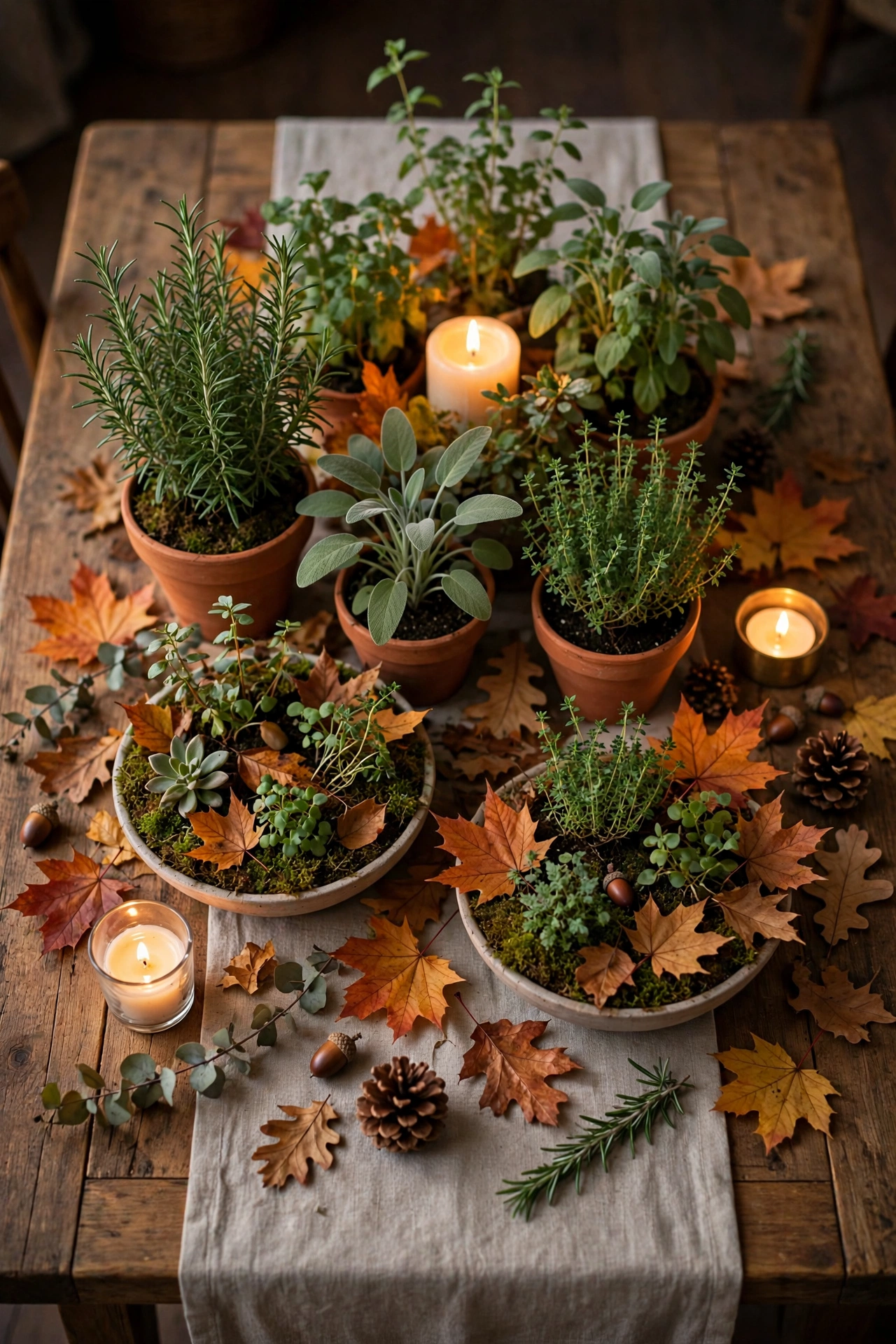
A living Thanksgiving centerpiece uses potted plants that stay green through the meal and keep growing after it. Herbs, garden bowls, and potted seasonal plants give scent, color, and height without cut stems that wilt before dessert is served. Keep plants in bright, indirect light whenever possible. Choose plants that suit the light and temperature of the room used.
Use the rating line under each heading to choose by time and cost. Check light and water needs before the table is set, and keep plants clear of hot dishes and serving traffic. The checklist at the end covers that check in one pass. Water plants the day before the meal, so soil is damp but surfaces stay dry. Keep a spare saucer ready for leaks.
1. Potted Rosemary, Thyme, and Sage Trio
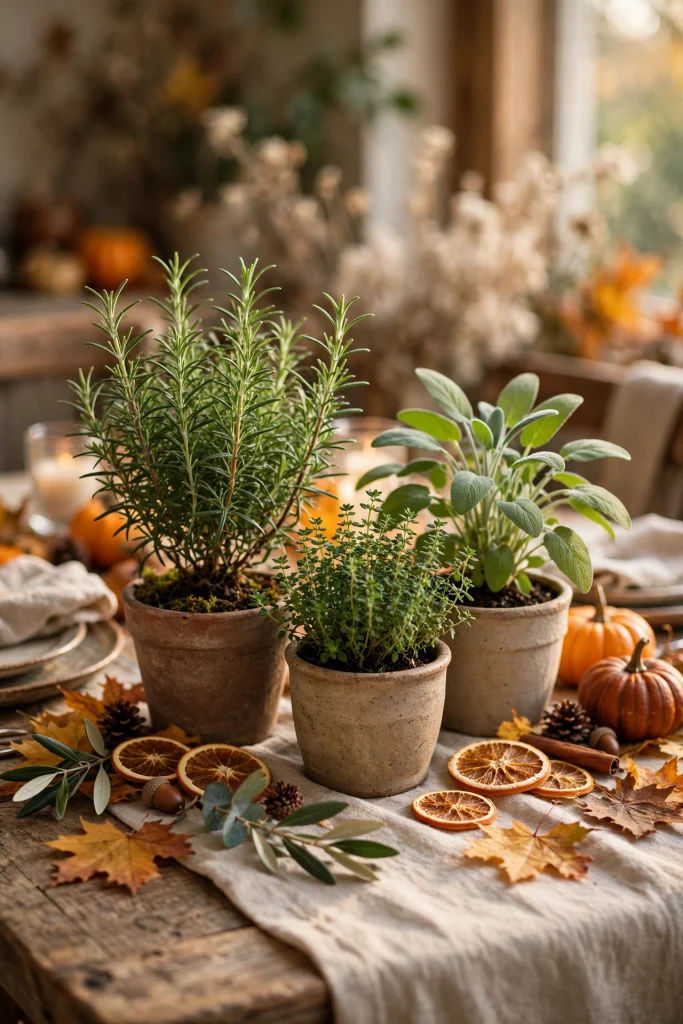
Best for: long dining tables. Time: 20 minutes. Cost: low to medium. Effort: easy.
Set three small potted herbs in a row down the center, with rosemary tallest at one end and thyme lowest at the other. The herbs scent the table gently, snip easily for cooking, and move to a sunny windowsill together after the meal without repotting. Snip herbs just before cooking, for fresh flavor.
What you need:
- Small pots of rosemary, thyme, and sage
- Matching saucers to protect the table
- Small scissors for snipping herbs cleanly
- A tray or board to group the pots
Avoid this: pots without saucers, which leave water rings on wood.
2. Low Garden Bowl With Succulents and Moss
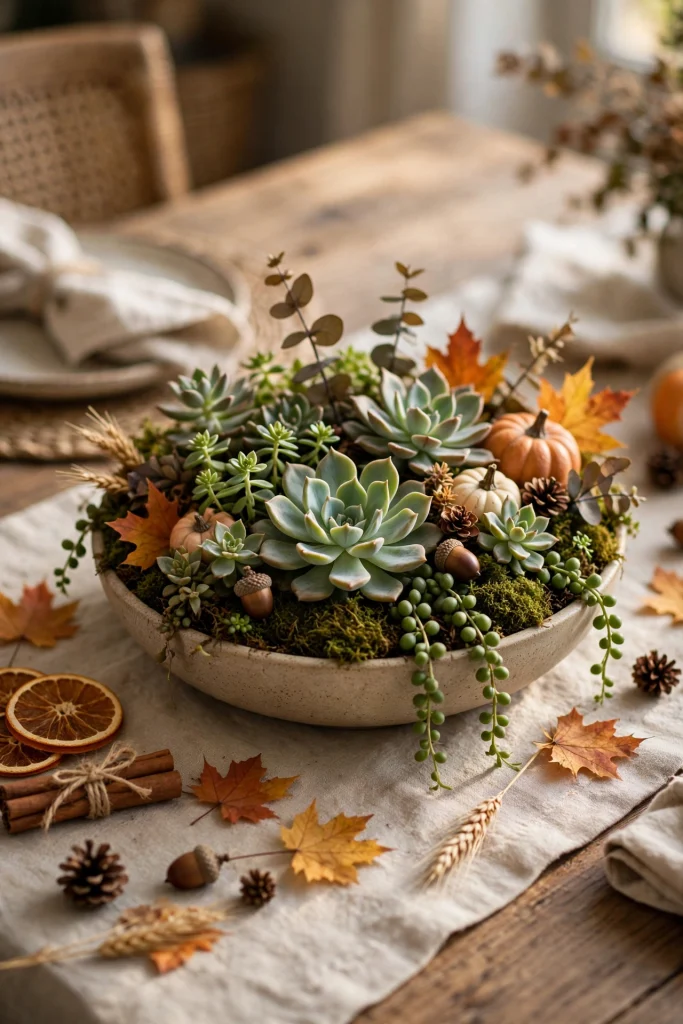
Best for: tables needing a low centerpiece. Time: 30 minutes. Cost: medium. Effort: easy.
Plant small succulents in a wide, low bowl, fill gaps with moss, and add a few small pinecones at the edges. The low height keeps views clear across the table, the bowl needs little water, and the planting lasts well beyond Thanksgiving with bright light. Mist moss lightly, only when dry to touch.
Steps:
- Add drainage material and soil to a low, wide bowl.
- Plant succulents with space between each rosette.
- Press moss gently into gaps around the plants.
- Water lightly and set the bowl in bright light.
Avoid this: overwatering, which rots succulent roots in a bowl without drainage holes.
3. Holiday Cactus in a Copper Pot
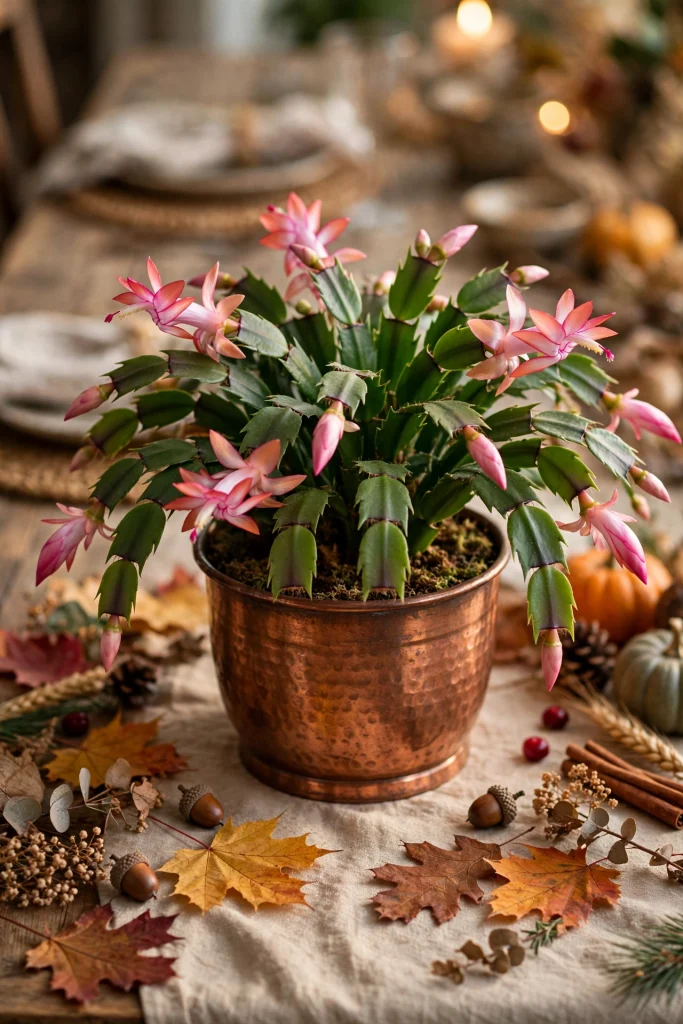
Best for: side tables and mantels. Time: 10 minutes. Cost: low to medium. Effort: easy.
Set a holiday cactus in flower in a copper or brass pot, and place it where guests see it on arrival. The buds open over several days, the plant needs only light watering, and the warm metal pot suits autumn colors without extra decoration or ribbon. Rotate the pot weekly, for even growth.
Check before you buy:
- Plant has firm stems and several unopened buds
- Pot has drainage or a liner to catch water
- Pot size suits the plant without crowding roots
- Plant sits stable and does not lean to one side
Avoid this: moving a budding cactus often, which can drop buds.
4. Potted Herb and Candle Garden Tray
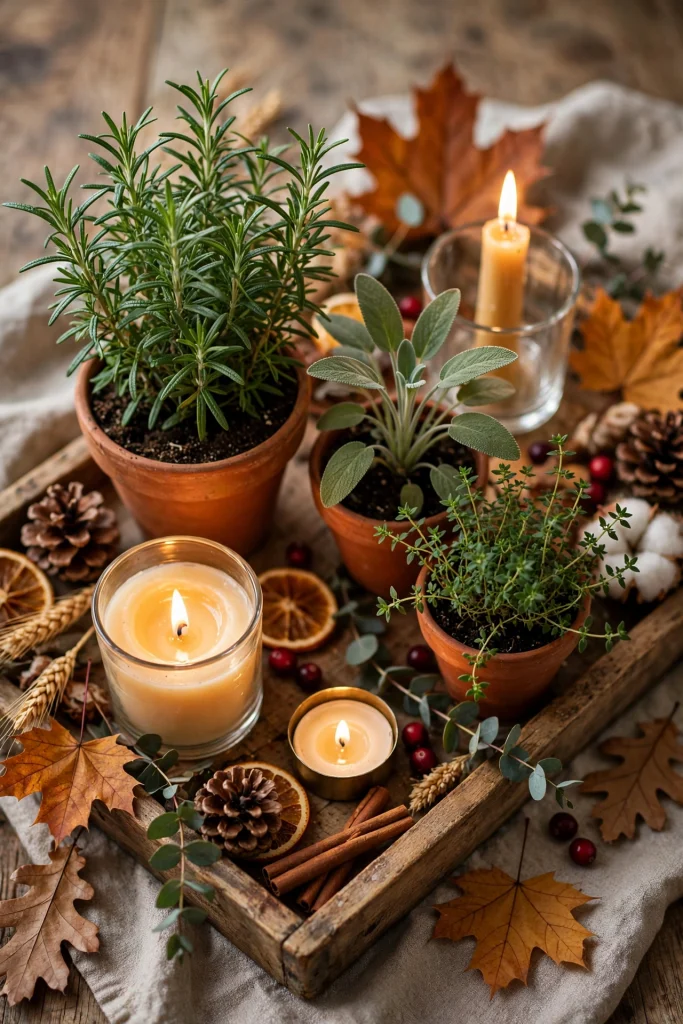
Best for: sideboards and dessert tables. Time: 25 minutes. Cost: low to medium. Effort: easy.
Arrange small potted herbs on a wooden tray with flameless LED candles between pots, keeping flames and heat away from leaves. The tray groups the plants for easy moving, the LED glow adds warmth at dusk, and the herbs stay usable in the kitchen after the holiday. Keep LED candles clear of leaves and stems.
What you need:
- Wooden tray with low edges and handles
- Three or four small potted herbs
- Flameless LED candles in varied heights
- Saucers or liners under every pot
Avoid this: real candles close to leaves, which dry and scorch foliage.
5. Living Wheatgrass Strip Down the Center

Best for: modern Thanksgiving tables. Time: 15 minutes to arrange. Cost: low. Effort: easy.
Lay a shallow tray of living wheatgrass down the center of the table for a fresh green strip that contrasts with wood, linen, and warm dishes. Trim the grass evenly before guests arrive, keep the tray level, and water lightly so the soil stays damp without pooling on the table.
Steps:
- Grow or buy wheatgrass in a shallow, level tray.
- Trim the grass evenly to one height.
- Set the tray down the center, clear of plates.
- Check the tray base for leaks before serving.
Avoid this: a tray that leaks or tilts, which soaks linen under the centerpiece.
6. Potted Ornamental Kale and Cabbage Bowl

Best for: cool porches and entry tables. Time: 20 minutes. Cost: low to medium. Effort: easy.
Plant ornamental kale or cabbage in a wide bowl for ruffled leaves in cream, pink, and green that echo autumn colors. The plants tolerate cool air, hold their shape for weeks, and need only regular watering and bright light to stay full through Thanksgiving week. Water at soil level, not over leaves.
Check before you buy:
- Plants are compact, with no yellow or damaged leaves
- Bowl is wide enough for roots to spread slightly
- Soil stays damp but never waterlogged
- Bowl sits where light reaches leaves evenly
Avoid this: hot, dark rooms, which make kale stretch and lose color.
7. Terrarium Bowl With Moss and Ferns
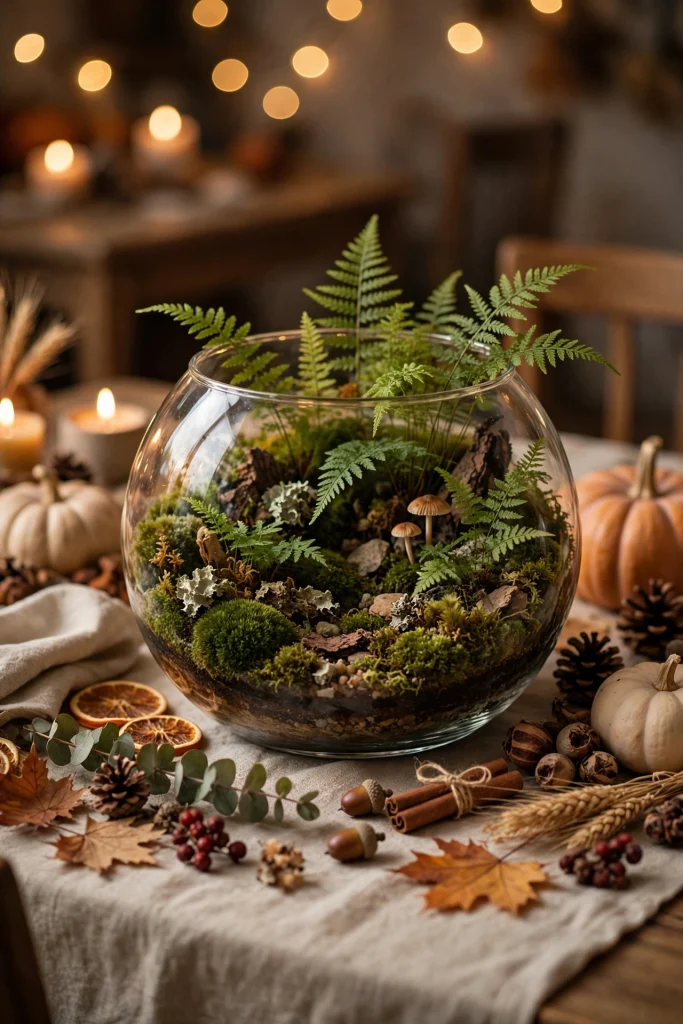
Best for: humid rooms and glass tables. Time: 35 minutes. Cost: medium. Effort: medium.
Layer stones, soil, moss, and small ferns in a wide glass bowl, mist lightly, and leave the top open for air flow. The glass shows the layers, the moss stays green with light misting, and the bowl moves easily from table to windowsill after the meal without disturbing roots. Mist in the morning, so leaves dry by evening.
What you need:
- Wide glass bowl with a flat, stable base
- Small stones for a drainage layer
- Potting soil suited to ferns and moss
- Small ferns and sheets of living moss
Avoid this: a sealed lid, which traps damp and fogs the glass.
8. Potted Rosemary Tree in a Basket
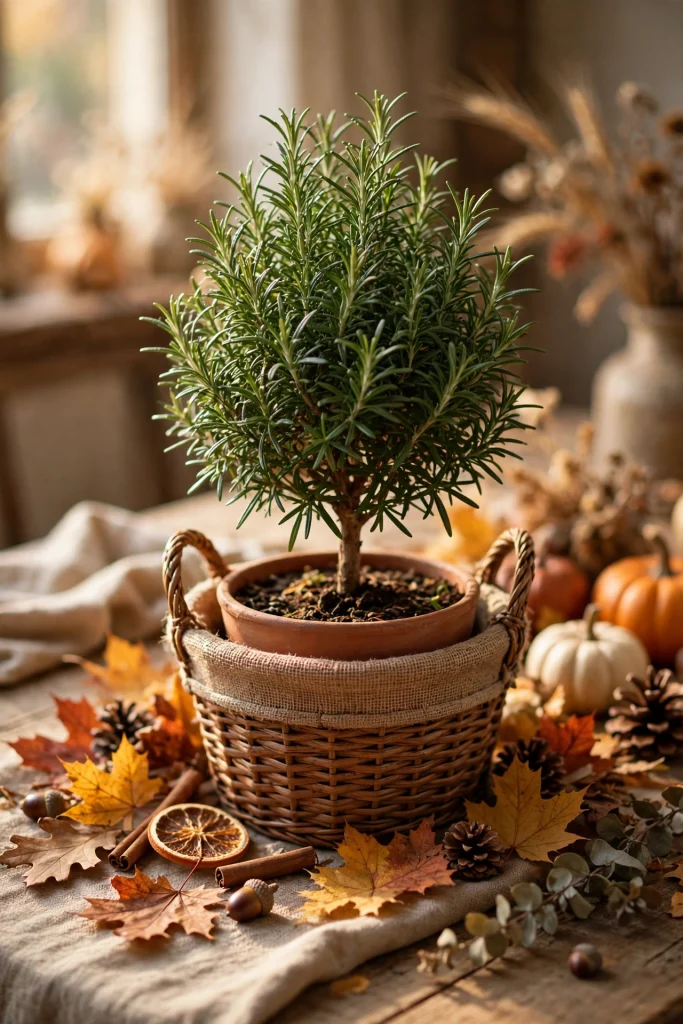
Best for: entry tables and small dining tables. Time: 10 minutes. Cost: medium. Effort: easy.
Set a rosemary plant trained into a small tree shape in a basket lined with plastic, and add a simple bow or tag at the base. The tree shape gives height without width, the scent suits a Thanksgiving entry, and the plant keeps growing on a sunny windowsill after the holiday. Prune lightly after flowering, to keep shape.
Steps:
- Line a basket with plastic to catch water.
- Set the potted rosemary tree inside, level and centered.
- Fill gaps around the pot with moss.
- Water lightly and place in bright light.
Avoid this: a basket without a liner, which soaks through onto furniture.
9. Forced Paperwhite Bulbs in a Low Bowl
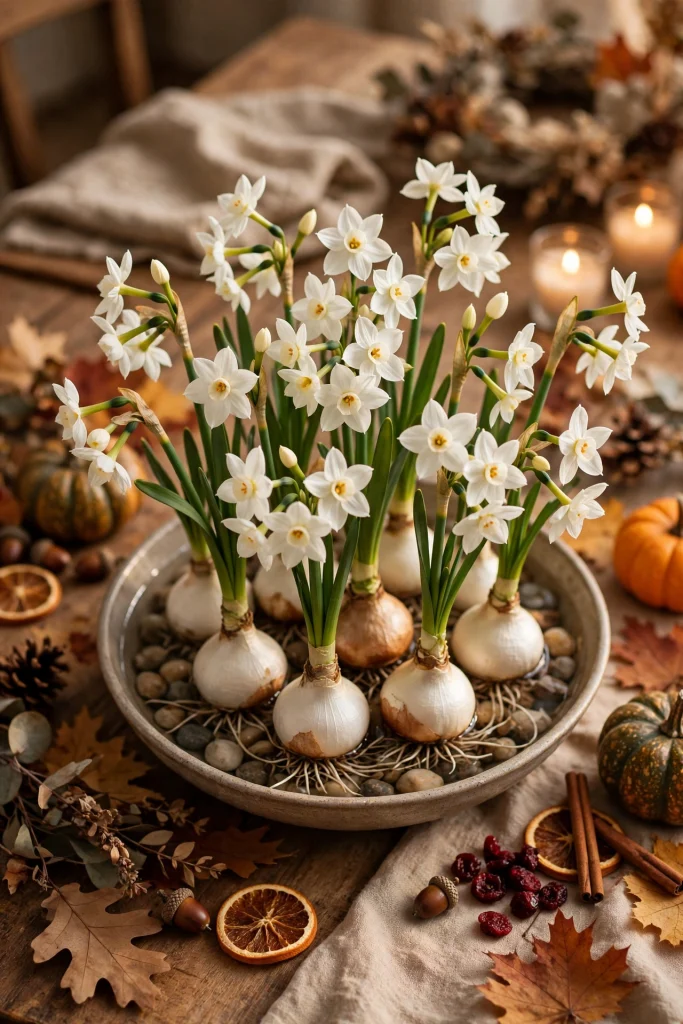
Best for: tables planned two weeks ahead. Time: 15 minutes to plant. Cost: low. Effort: easy.
Plant paperwhite bulbs in a low bowl of stones and water, or in soil, and keep the bowl in bright light until stems rise and flowers open. The white flowers scent the room gently, the bowl stays low enough for conversation, and stems can be staked lightly if they lean toward light. Stake leaning stems early, with soft ties.
Check before you buy:
- Bulbs are firm, with no soft spots or mold
- Bowl is low, wide, and stable on the table
- Stones or soil hold bulbs upright as roots grow
- Stems get bright light from above, not one side
Avoid this: dark corners, which make stems tall, weak, and leaning.
10. Potted Violas in a Wooden Crate

Best for: porches and long tables. Time: 25 minutes. Cost: low to medium. Effort: easy.
Set small pots of violas in autumn colors inside a low wooden crate, with moss filling gaps between pots. The crate groups the plants for easy carrying, the flowers add small-scale color at table height, and pots lift out singly for watering without moving the whole display. Deadhead spent flowers weekly, to encourage blooms.
What you need:
- Low wooden crate with a flat base
- Small pots of violas in autumn colors
- Moss for filling gaps between pots
- Saucers or a liner to protect the crate
Avoid this: watering violas from above in full sun, which spots petals.
11. Herb Garden in a Vintage Tin Planter
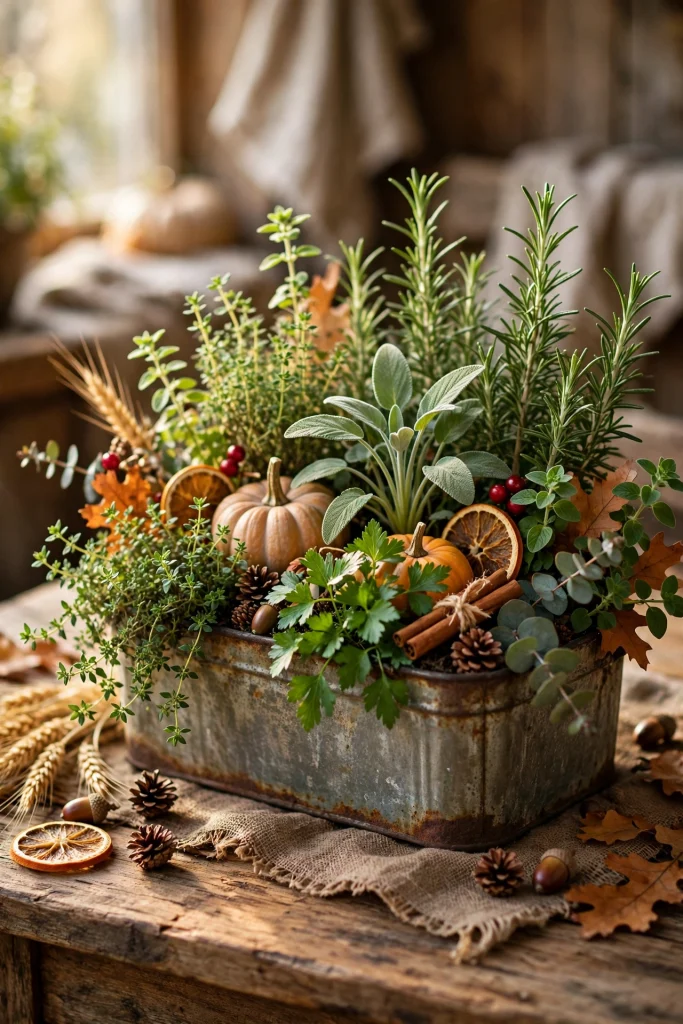
Best for: kitchen tables and sideboards. Time: 30 minutes. Cost: low to medium. Effort: medium.
Plant parsley, chives, and thyme in a vintage tin planter with drainage holes, label each herb with a small wooden marker, and set the planter where cooks can snip herbs during meal prep. The tin adds patina and history, the markers stop mix-ups, and the herbs keep growing indoors with light and regular watering. Snip outer leaves first, for regrowth.
Steps:
- Check the tin for drainage holes and add them if needed.
- Add soil and plant herbs with space to grow.
- Label each herb with a wooden marker.
- Water lightly and set in the brightest spot available.
Avoid this: tins without drainage, which leave roots sitting in water.
12. Moss and Fern Garden Bowl for After Dinner
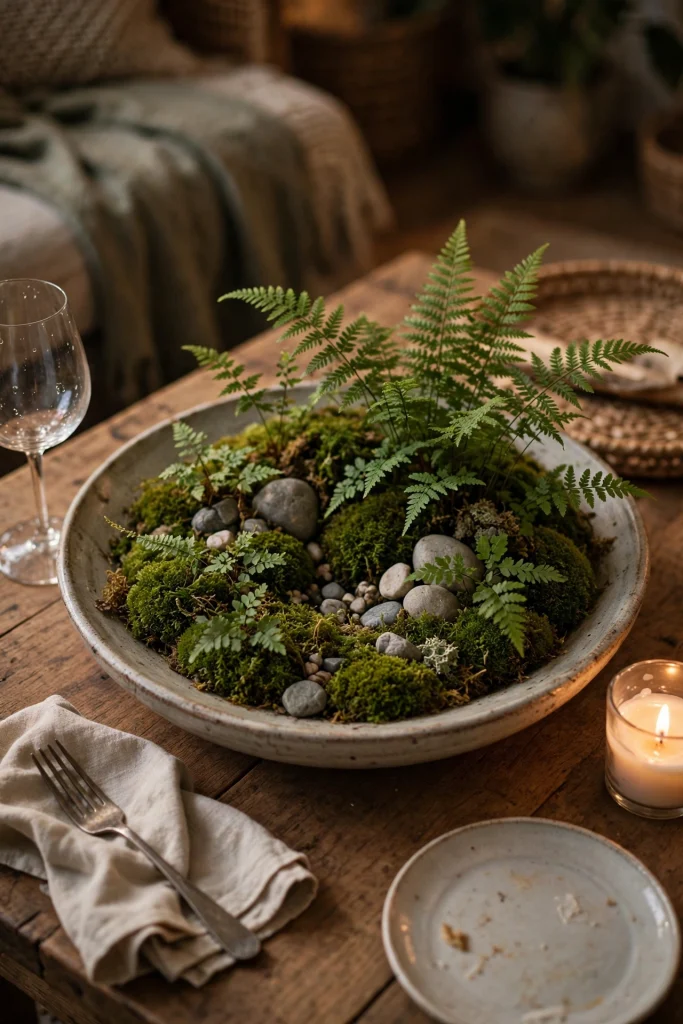
Best for: coffee tables and mantels after the meal. Time: 30 minutes. Cost: medium. Effort: easy.
Build a moss and fern bowl in a wide ceramic dish, add a few small stones, and move it to a coffee table or mantel once dinner ends. The bowl needs only misting and indirect light, stays green through winter indoors, and gives the living centerpiece a second use beyond the dining table.
What you need:
- Wide ceramic dish with a flat base
- Living moss sheets and small ferns
- Small stones for texture and drainage
- Mister bottle for light, regular misting
Avoid this: direct sun and hot air vents, which dry moss quickly.
Quick Checklist
- Light and water needs are checked before the table is set.
- Every pot has a saucer, liner, or tray under it.
- Centerpiece height leaves views clear across the table.
- Plants stay clear of hot dishes and serving traffic.
- Herbs are labeled so cooks snip the right plant.
- Plants have a bright spot ready after the meal.
Common Questions
How early should a living centerpiece be set up?
Set potted herbs and garden bowls a day or two ahead, so plants settle and any leaks show before guests arrive. Forced bulbs need two to three weeks, so plant those well before Thanksgiving week.
Can living centerpieces stay on the table during the meal?
Yes, when height stays low and pots sit clear of plates and serving dishes. Move tall or wide plants to a side table if serving space gets tight during the main course.
What happens to the plants after Thanksgiving?
Move herbs to a sunny windowsill and keep watering lightly, and move garden bowls to bright, indirect light. Most herbs and foliage plants keep growing indoors through winter with steady light and careful watering.