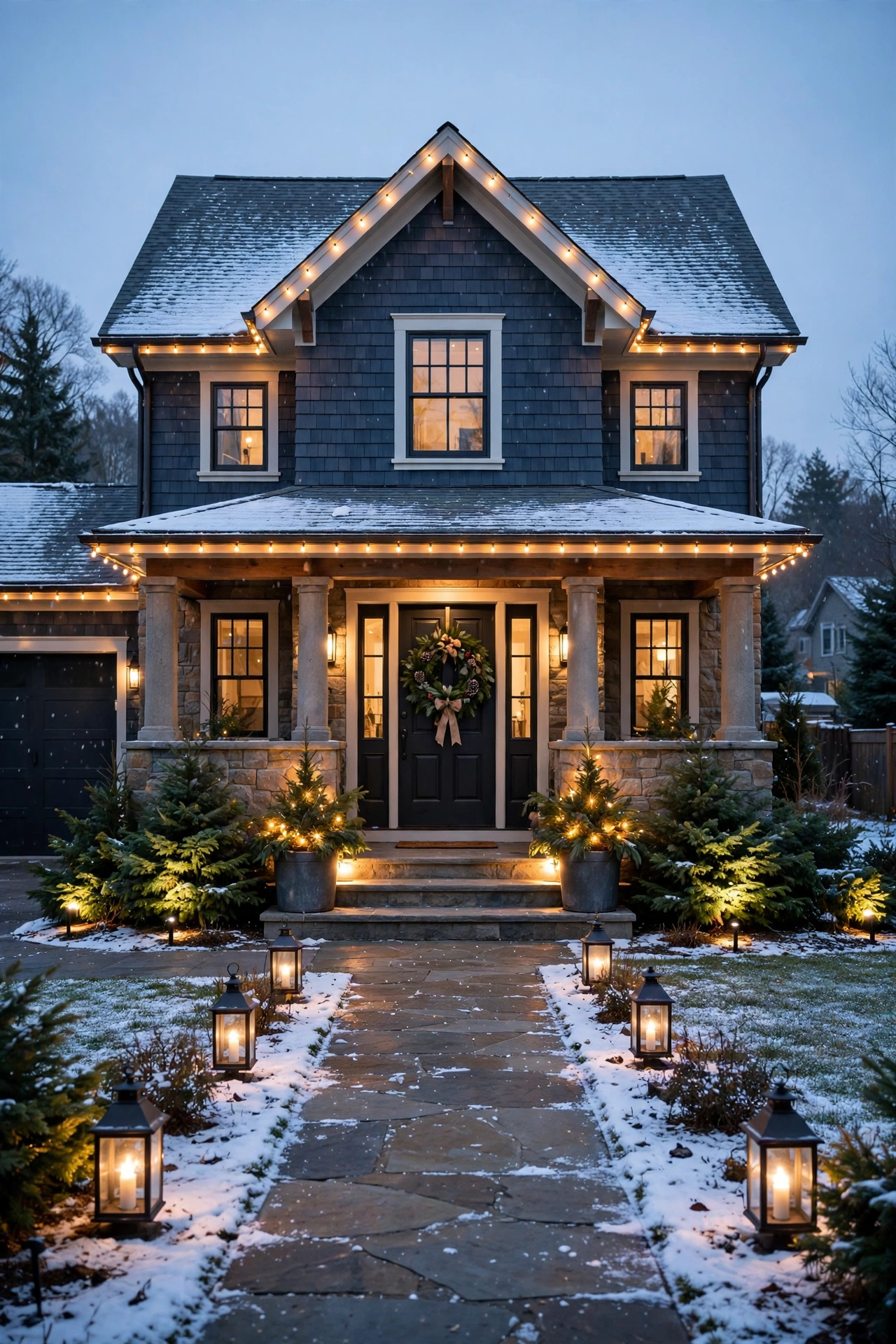
Outdoor Christmas decor fails in winter for three predictable reasons: wind pulls it loose, rain and freeze break it down, and weak fixings give way at the worst moment. Every idea below passes a simple test first. It can be anchored firmly, kept dry enough to survive, or made from a material that handles frost without falling apart.
Use the rating line under each heading to choose by time and cost. Check the surface and the exposure for each zone before buying anything. The checklist at the end covers that check in one pass, so nothing gets hung twice. If an idea needs a fixing or a power source that is not already in place, buy that first, before the decoration itself.
1. Roofline String Lights With Clips
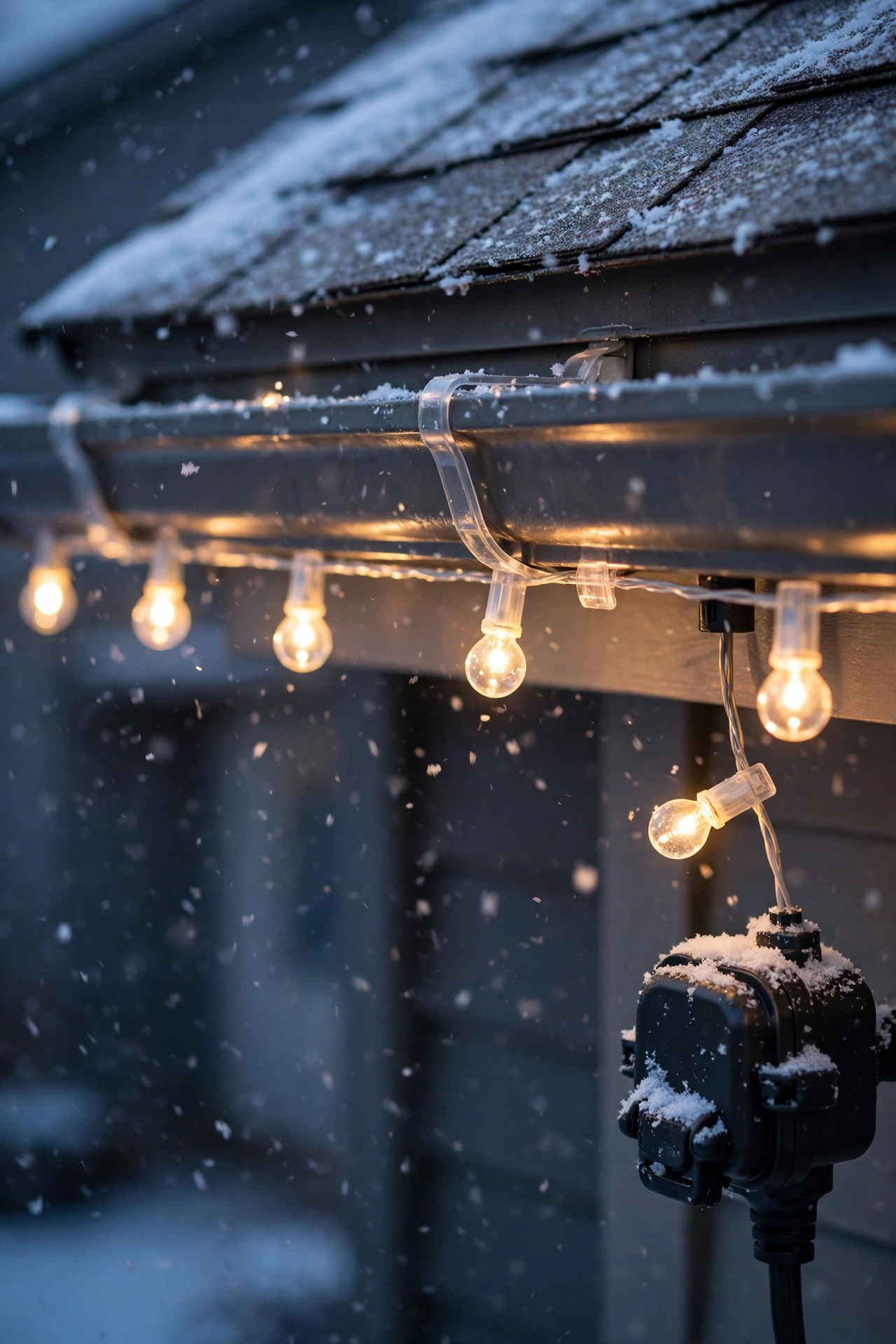
Best for: rooflines and gutters. Time: 1–2 hours. Cost: medium. Effort: medium.
Clips hold the strand without nails, and outdoor-rated lights handle rain and cold without cracking. Test the full strand before hanging it, because a dead section is far harder to fix once the clips are up and the ladder is put away. Keep spare clips on hand, because a clip that cracks in cold weather leaves a strand sagging overnight.
Steps:
- Test the strand indoors first, and replace any dead bulbs.
- Fit clips to the gutter or shingle edge, spaced evenly.
- Hang in daylight, keeping plugs raised and covered.
- Check at dusk for dark gaps, then set the timer.
Avoid this: indoor-rated lights, and nails or staples driven through the cord.
2. Oversized Wreath on the Door

Best for: front doors with cover. Time: 20 minutes. Cost: low to medium. Effort: easy.
A large wreath reads clearly from the street, even in low winter light. Sealed greenery and a weather-proof bow hold their shape through rain and frost, while paper and felt soak, sag, and freeze into a heavy, misshapen mass. Check the hook rating before hanging, and test it with the full wreath weight before the door is used all day.
What you need:
- Sealed evergreen wreath, rated for outdoor use
- Weather-proof bow or ribbon
- Sturdy hook rated for the wreath weight
- Wire or ties to fix the bow against wind
Avoid this: paper ornaments and unsealed ribbon that soak and freeze.
3. Garland on Rails and Fences
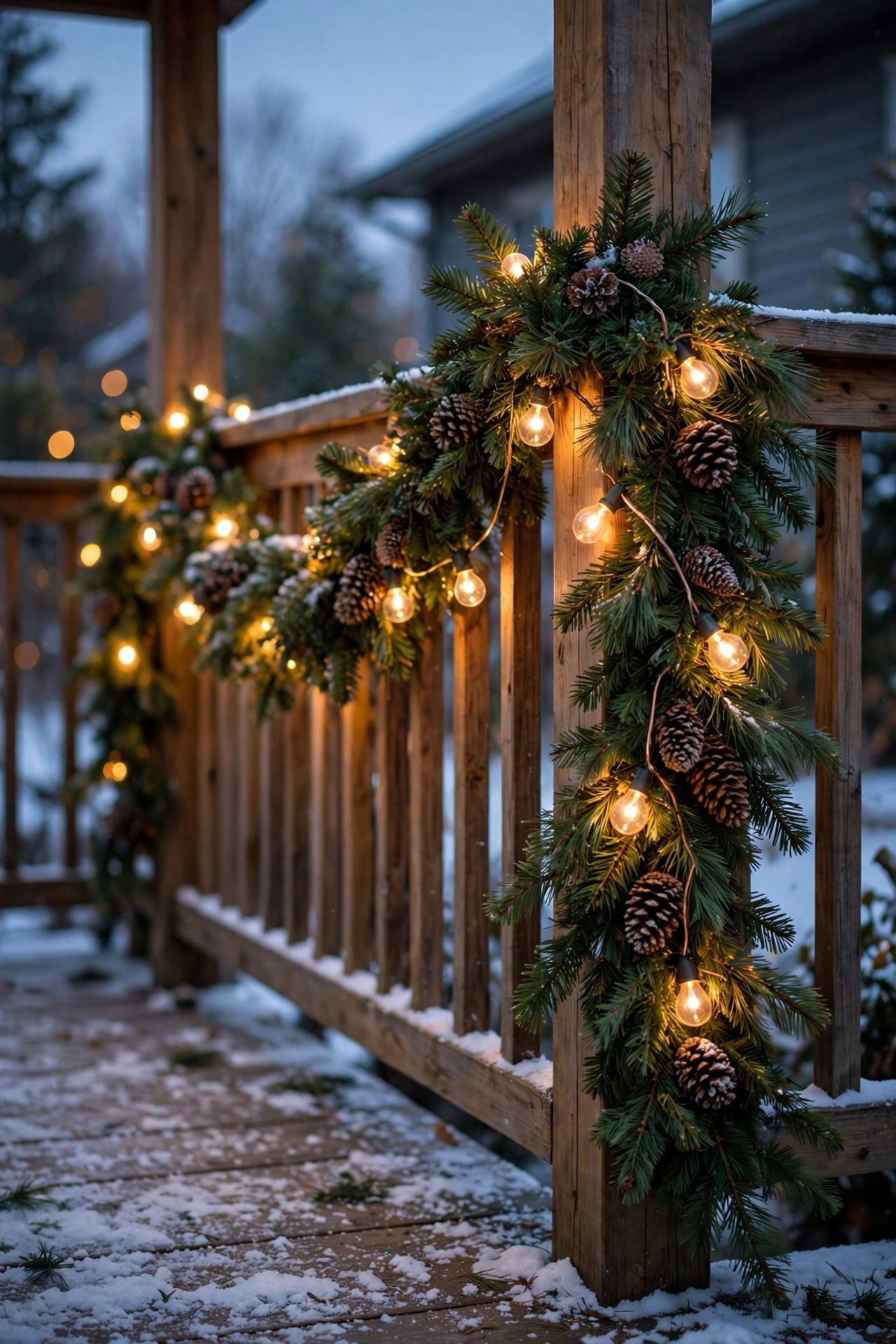
Best for: porches, rails, and fences. Time: 45 minutes. Cost: medium. Effort: easy.
Garland softens hard lines and frames a porch without any wall work. Wire it firmly at regular intervals so wind cannot pull it loose, and add lights only when they are outdoor-rated, with every connection kept covered and dry. Choose garland with a wired core where possible, because it holds its shape and stays in place far better than loose, unwired garland in wind.
Steps:
- Measure the rail or fence run before buying garland.
- Wire the garland at every third loop, not only at the ends.
- Add outdoor-rated lights, keeping connections covered.
- Check by hand: the garland should not slide or lift.
Avoid this: draping garland loose, with no fixings in the middle.
4. Lit Planters With Evergreen and Pinecones
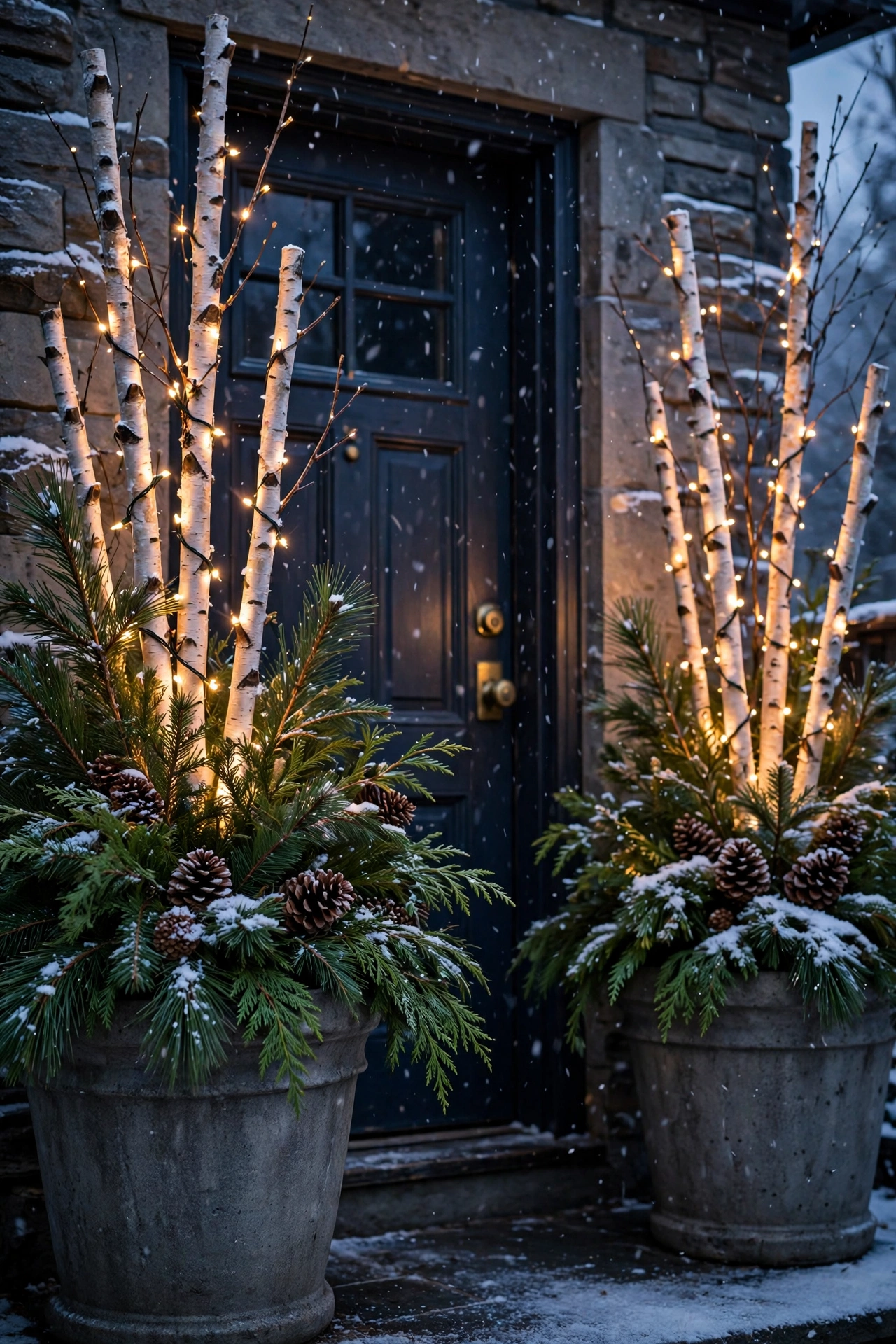
Best for: doorways and steps. Time: 30 minutes per planter. Cost: low to medium. Effort: easy.
Planters weight the doorway display and need no wall fixings at all. Evergreen, pinecones, and birch stems survive frost and look full all season, and a heavy planter stays put in wind that would topple a lighter display in seconds. Empty any saucer under the pot, so standing water cannot freeze solid and crack the base.
What you need:
- Heavy planter that will not tip in wind
- Evergreen stems, pinecones, and birch stems
- Outdoor-rated fairy lights, if lights are used
- Soil, stones, or foam to hold stems upright
Avoid this: light planters that tip, and glass ornaments at step height.
5. Lanterns Along the Path

Best for: paths and porches. Time: 15 minutes. Cost: low. Effort: easy.
Lanterns mark the route at night and guide visitors safely to the door. Stable bases and enclosed or outdoor-rated lights keep them upright and safe, while a lantern placed in the path itself becomes a trip hazard the moment the light fades. Space lanterns evenly and keep a clear gap at steps, so visitors can see each tread clearly without stepping around a light.
Check before you buy:
- Base is wide and heavy enough not to tip
- Light source is outdoor-rated or fully enclosed
- Lantern sits clear of foot traffic and snow piles
Avoid this: lanterns in the middle of the path, and open flames in wind.
6. Lighted Birch Branches in a Heavy Pot
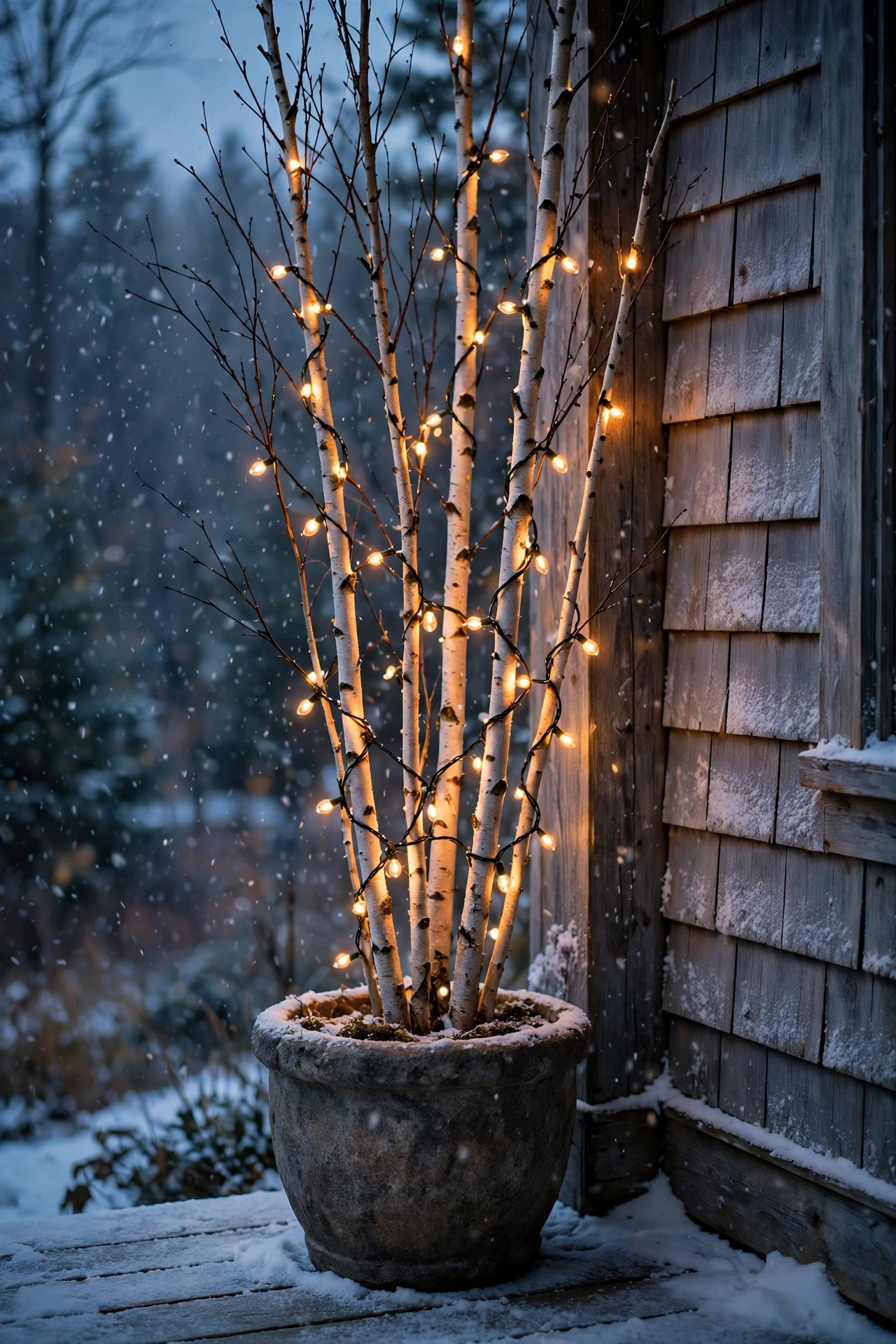
Best for: porches and corners. Time: 30 minutes. Cost: medium. Effort: easy.
Bare branches wrapped in outdoor lights give height without any weight on walls or gutters. A heavy pot and firmly packed stems stop the whole display tipping in gusts, which is the failure point for almost every tall, light, freestanding winter display. Trim branches to different heights for a natural shape, and keep the tallest stem well below any overhang that could catch it in wind.
What you need:
- Heavy pot or weighted base
- Birch or twig branches, cut to the pot height
- Outdoor-rated string lights
- Stones or soil to anchor the stems firmly
Avoid this: tall branches in a light pot with no weight at the base.
7. Window Boxes With Greenery and Lights
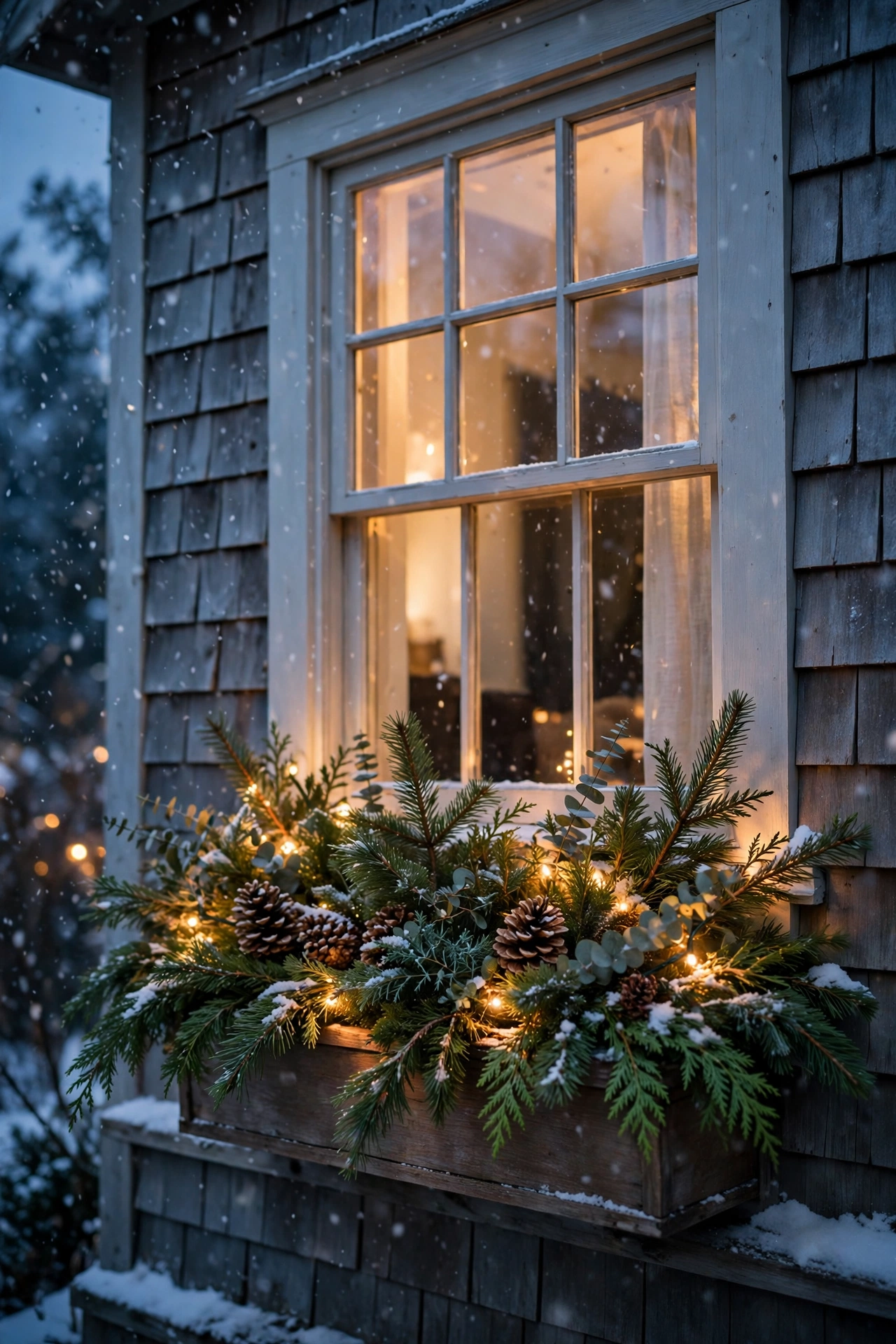
Best for: windows with boxes or ledges. Time: 40 minutes. Cost: medium. Effort: easy.
Window boxes frame the house from the street and add color at eye level. Greenery wired into the box stays put in wind, and lights with covered connections keep working through rain, provided water cannot pool and freeze inside the box itself. Line the box with a liner that drains, and lift the box to check the fixing once before it is filled and heavy.
Steps:
- Fix the box firmly before filling it.
- Wire greenery in so wind cannot lift it.
- Add outdoor-rated lights with covered connections.
- Check drainage so water does not pool and freeze.
Avoid this: overloading a loose box, and lights sitting in pooled water.
8. Weather-Proof Porch Cushions and Throw

Best for: covered porches. Time: 10 minutes. Cost: low to medium. Effort: easy.
Outdoor fabric and a sealed throw add color without damage, and they make a covered porch look finished in minutes. Keep both under cover, and bring the throw inside during heavy rain, because even outdoor fabric stays damp and cold when it is left to soak. Shake cushions out after rain and let them dry under cover, so damp does not sit in seams and leave marks.
What you need:
- Outdoor-rated cushions in Christmas colors
- Weather-proof throw, stored dry when not in use
- Storage box or indoor spot for heavy rain days
Avoid this: indoor cushions outside, which soak, freeze, and stain.
9. Spotlights on Greenery and the House Shape
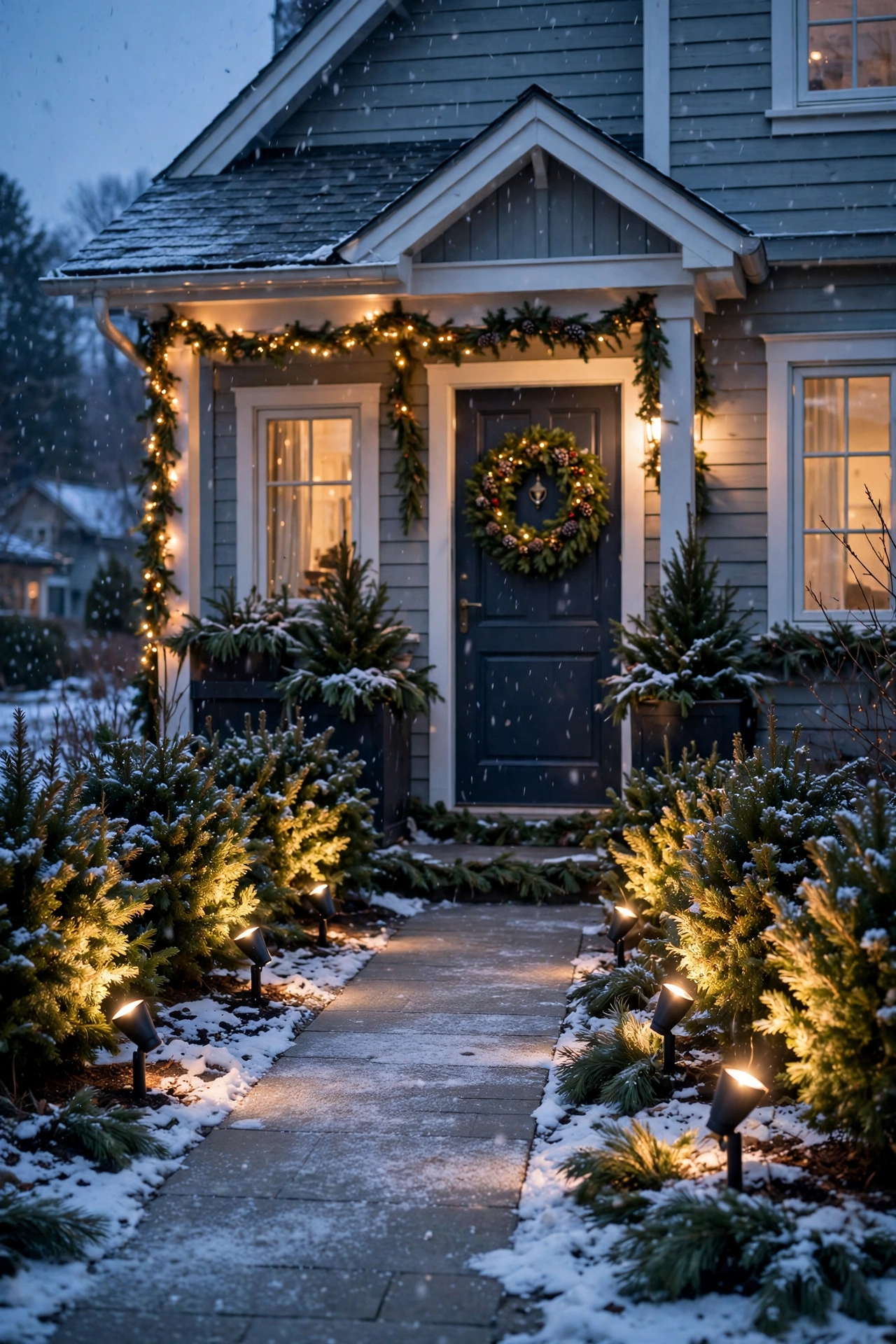
Best for: yards and house fronts. Time: 30 minutes. Cost: medium. Effort: easy.
One or two spotlights aimed at greenery or the roofline give more effect than extra strands hung everywhere. Aim each beam carefully so it highlights the house shape without glaring into windows, the path, or a neighbor’s yard at night. Test the beam at dusk from the path, not only from the yard, because glare looks very different at eye level in the dark.
Check before you buy:
- Spotlight is outdoor-rated, with a stable stake or base
- Beam can be aimed without moving the whole fitting
- Timer or smart plug is outdoor-rated
- Light does not glare into a window or the walkway
Avoid this: spotlights aimed at eye level on the path.
10. Sealed Wooden Welcome Sign
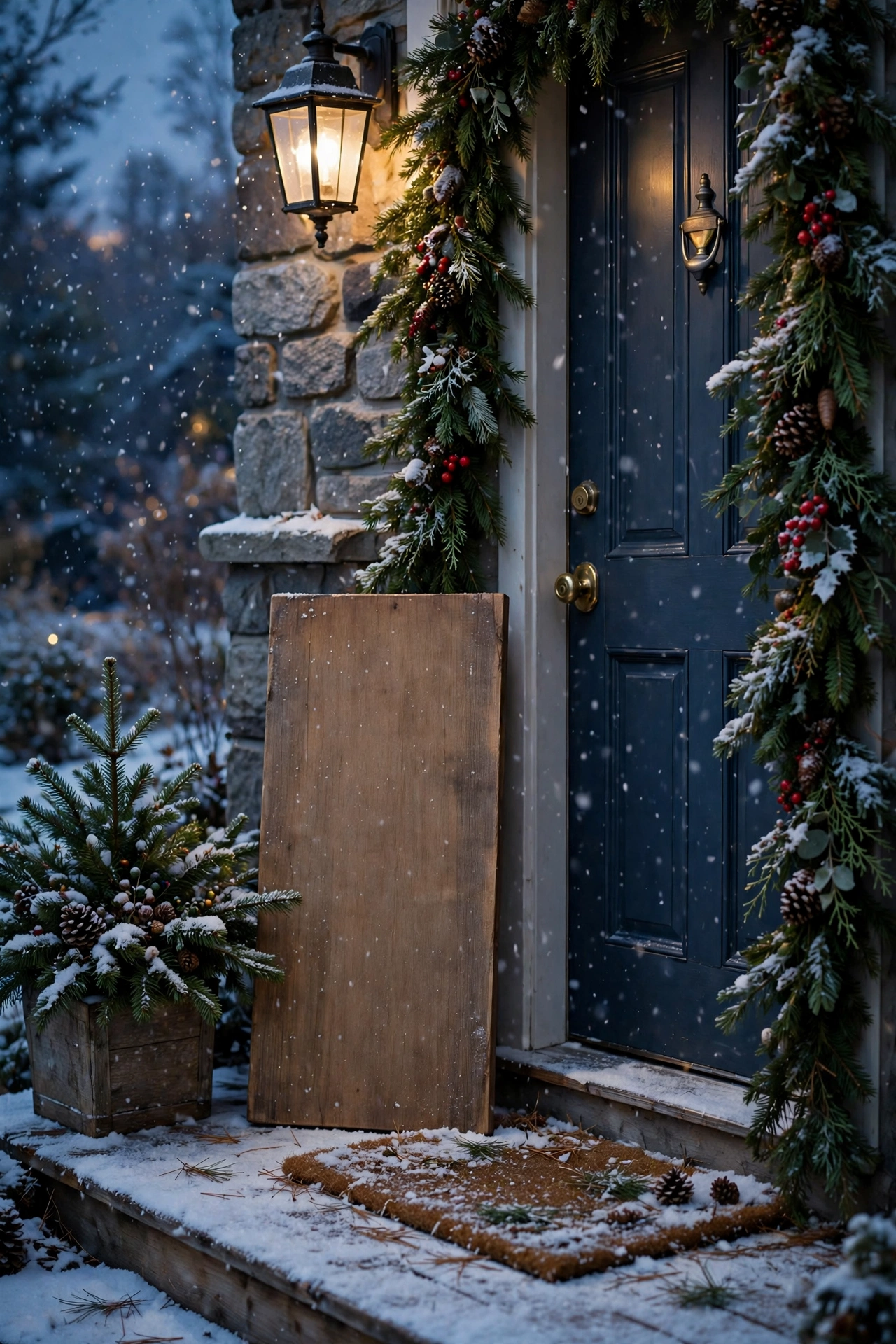
Best for: doorways and porches. Time: 20 minutes. Cost: low. Effort: easy.
A sealed wooden sign survives rain and frost and greets visitors before the door even opens. Fix it so wind cannot swing it into the door or wall, and re-check the fixing after the first storm, when most loose signs start to move. Seal the back and edges as well as the front, because wind-driven rain reaches the back of a sign on an open porch.
What you need:
- Sealed wooden sign with an outdoor-rated finish
- Fixing suited to the surface: hook, stand, or stake
- Spare fixing for the first re-check after wind
Avoid this: unsealed paint that runs in rain, and hanging signs with no fixing.
11. Stacked Crates With Shatterproof Ornaments

Best for: porches and corners. Time: 30 minutes. Cost: low to medium. Effort: easy.
Stacked crates make a tiered display with no wall work and no drilling. Shatterproof ornaments and firm stacking stop breakage in wind, while the heaviest crate at the bottom keeps the whole stack stable on a level surface. Leave a small gap between crates for air flow, and check the stack after rain, when wet greenery adds weight at the top.
Steps:
- Stack crates on a level surface, heaviest at the bottom.
- Fix crates together or weight the base.
- Fill with shatterproof ornaments and greenery.
- Check by hand: the stack should not rock.
Avoid this: glass ornaments outdoors, and tall stacks with no base weight.
12. Anchored Figures That Will Not Blow Over

Best for: yards and porches. Time: 30 minutes. Cost: medium. Effort: medium.
Figures read well from the street but catch wind like sails, so anchoring matters more than size. Anchor the base to the surface, keep the figure clear of walkways, and check it again after the first storm, when loose stakes and weights usually reveal themselves. Photograph the anchor positions before the first storm, so a shifted figure can be put back in exactly the same spot.
What you need:
- Figure made for outdoor use, shatterproof where possible
- Ground stakes, sandbags, or weights suited to the surface
- Outdoor-rated lights or power, if the figure is lit
- Clear space around the figure, away from foot traffic
Avoid this: tall figures with no anchor, trusted to weight alone.
Quick Checklist
- Exposure and surface checked for every zone.
- Outdoor-rated lights, cords, and timer tested before hanging.
- Every freestanding piece anchored and checked by hand.
- Paper, felt, and glass kept under cover or indoors.
- Walkways clear, plugs dry and raised, cords covered.
- Night walk-through done before the display is finished.
Common Questions
Can indoor string lights be used outside under a porch roof?
No, as a rule. Use outdoor-rated lights even under cover, because wind-driven rain and damp still reach them, and indoor lights are not built to handle cold, moisture, and flexing.
What anchors work on concrete when drilling is not allowed?
Weighted bases and outdoor-rated adhesive or clamp fixings suited to concrete work well. Check each anchor by hand, and add a second anchor on tall pieces that catch wind.
How long does real greenery last outside in winter?
It varies by exposure and type. Wire it firmly, check it weekly, and replace it when it dries out or starts to drop, before it looks thin and patchy from the street.